Composting

Disease Control

Growing Transplants

Harvesting Vegetables

Herbs

Insect Control

Planning a Garden

Planting

Storing Vegetables

Credits

Growing Transplants

Starting Plants at Home

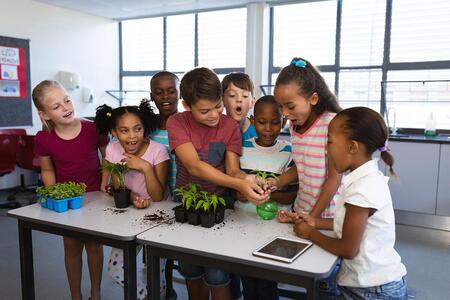
Get a head start on your garden by planting frost-susceptible vegetables indoors. The seedlings can be transplanted into the garden when weather permits.

Vegetables which take longer to grow such as tomatoes, peppers, and eggplants will be ready to harvest sooner. This will extend your harvest season. Cool-season crops such as cabbage, Brussels sprouts and broccoli will be ready to pick before the hot weather arrives.

Growing your own transplants is cheaper than buying them in the store. It also allows you to grow varieties that may not be available in local stores.

Check with your county Extension office for varieties recommended for Illinois. Seeds left over from last year should not be used unless they were stored properly.

Use Soil or Growing Mixes

Garden stores carry soilless growing mixes, germinating mixes, potting soils, peat cubes and compressed pellets. These usually contain fertilizer and are free from insects, diseases and weeds.

Outdoor soil often contains insects and disease. It should be sterilized before growing plants. These soils usually need fertilizer and other improvements. Combine equal parts of:

What's Cooking?

Soil can be pasteurized in an oven. Spread soil not more than 3 to 4 inches deep in a pan. Place a thermometer in the center and cover the pan with aluminum foil.

The pan should be placed in an oven at 250 to 275° F. When the thermometer reaches 180 degrees, lower the oven temperature to maintain the soil temperature at 180 degrees for 30 minutes.

Adapt Containers for Plants

Seeds may be planted in peat pots, paper cups, clay pots, trays or plastic egg cartons. Punch a hole in the bottom of each compartment for drainage.

Used clay or plastic containers may be sterilized by soaking overnight in a solution of one part bleach to nine parts water. Rinse well before using.

Muskmelon and watermelon seeds should be planted in peat pots. These containers can be planted in the garden during transplanting. Peat pots are necessary since muskmelons and watermelons do not tolerate root disturbance.

Get Ready, Get Set.... Plant!

In moist soil plant two or three seeds per compartment at the depth recommended on the seed packet. After planting the seeds, water lightly. Water the plants as they grow but avoid overwatering.

Eggplants, peppers, muskmelons and watermelons should be kept in 80 to 90 degree temperatures for germination.

Other vegetable seeds will germinate at 60 to 80 degrees. Seedlings should be grown at 60 degrees at night and 70 to 75 degrees in the day.

Planting Dates for Chicago

Vegetable Plant Seeds Indoors Transplant Into Garden
Broccoli* March 10 - March 25 April 15 - May 10
Cabbage* March 25 - April 5 May 1 - May 25
Cauliflower* March 25 - April 5 May 1 - May 25
Eggplant April 5 - April 20 May 20 - June 10
Herbs April 1 - April 15 May 1 - June 10
Lettuce March 25 - April 5 May 1 - May 25
Muskmelon April 25 - May 5 May 20 - June 15
Pepper April 5 - April 20 May 20 - June 10
Tomato April 20 - May 1 May 20 - June 15
Watermelon April 25 - May 5 May 20 - June 15

*For fall gardens, these vegetables may be seeded in June in a small section of the garden and transplanted to their final location from July 1 to July 15. These plants also may be seeded and thinned in June at their final location.

Thinning Transplants

When seedlings emerge, thin to one per pot by pinching off or carefully pulling out excess plants. Thinning is not necessary when growing and transplanting muskmelons and watermelons.

Shedding Light on Transplants

Seedlings should be placed in a south or southwest window. A cool white fluorescent light or grow-light can be placed 6 inches above plants for a total of 12 to 16 hours of light a day.

Soil or growing medium should be fertile enough to sustain the plants for the first 3 or 4 weeks. If the nutrients are not adequate, plant color becomes a light or yellowish green. Use a solution made with fertilizer (10-50-10, 20-20-20, 18-12-6, etc.) at rates of one tablespoon per gallon of water. Apply once a week.

From Pots to Lots

Before seedlings are transplanted outdoors, they should be gradually hardened by exposing them to outside conditions for a few days before transplanting. Place plants outdoors a few hours each day, extending the period as planting time approaches.

If you cannot provide good conditions for growing transplants, shorten their growing time indoors and transplant younger, smaller plants in the garden. They are preferable to tall, spindling plants.


University of Illinois Extension | Urban Programs | University of Illinois at Urbana-Champaign | College of ACES